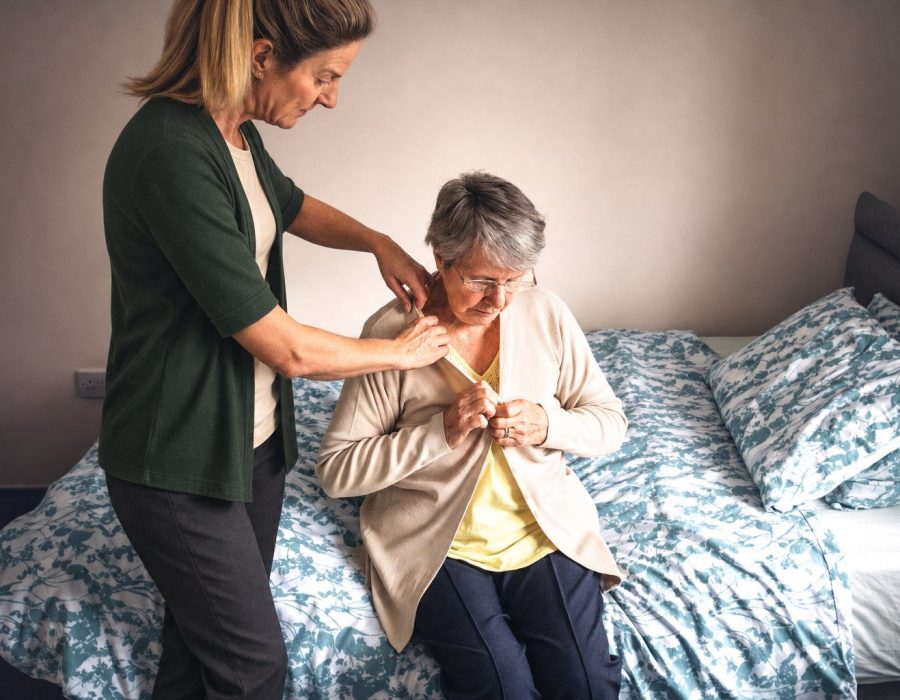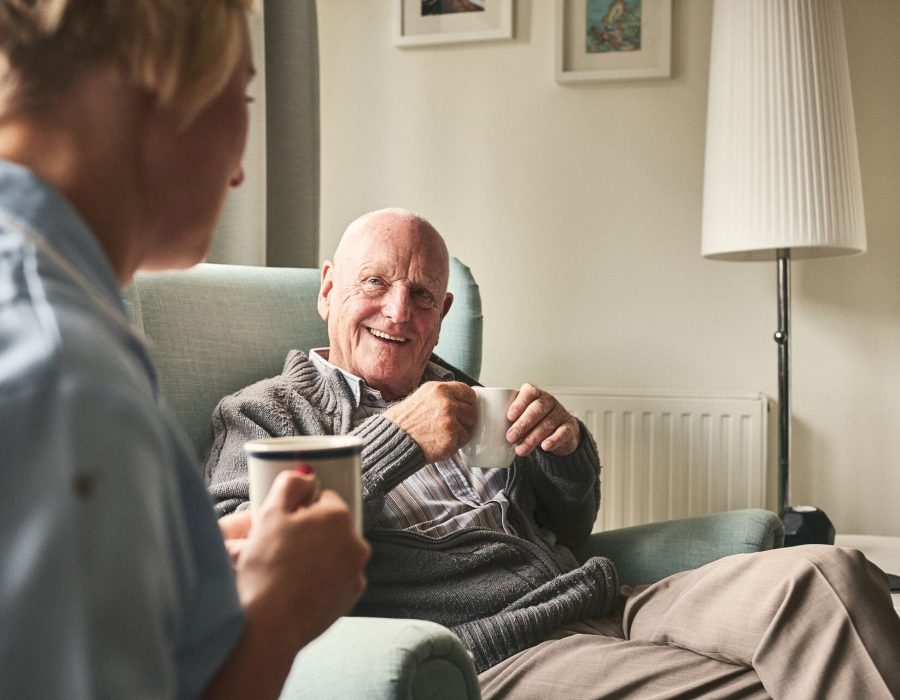

Dementia support that protects what's familiar.
Routines and familiar faces matter more as memory changes. Tell us what works, and every visit starts from what’s already known.
Familiar routines, kept. Home stays home.
What would you want someone to understand?
Tell us the routines, the words that calm and the people who matter. That's where good dementia support starts.
You know them best. We build the plan from what you tell us.
Small details like a favourite chair, a morning radio show or the name they like to be called make a real difference. They go into the plan so every caregiver starts from what you already know.
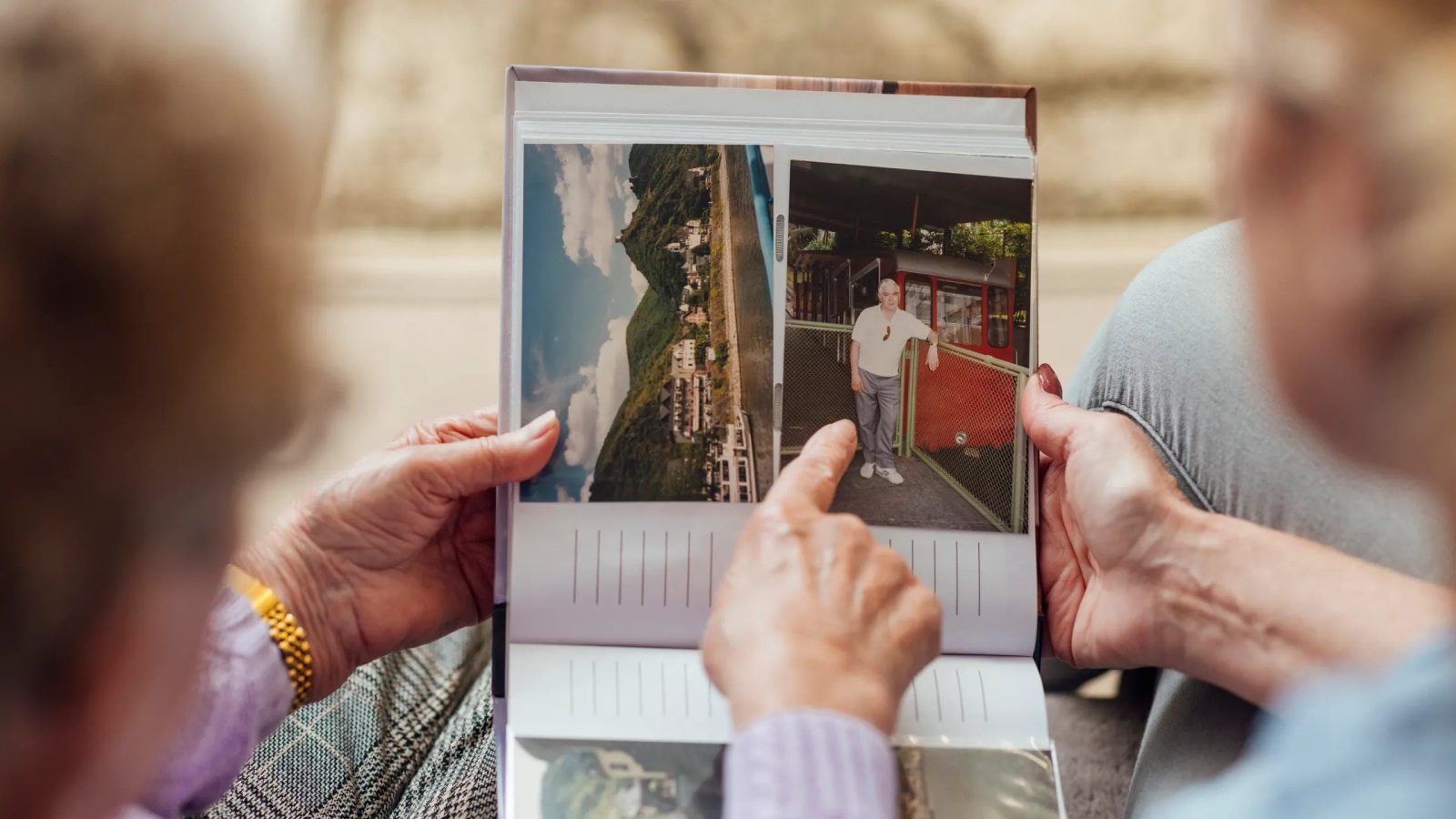
Supporting someone living with dementia at home.
Familiar routines, patience and a plan that changes as needs change.
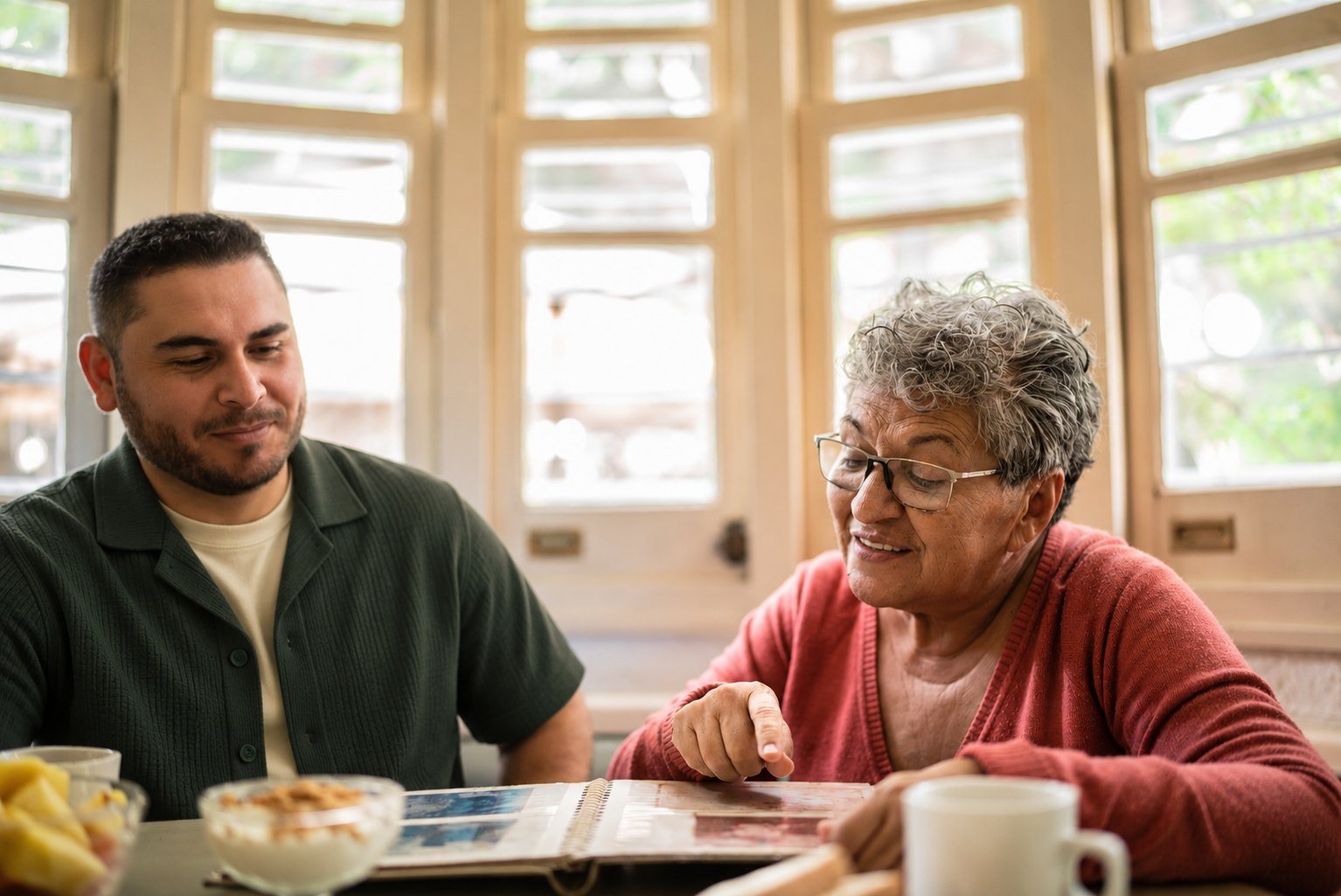
Home is part of the care
For someone living with dementia, home holds more than furniture. It holds routines, landmarks and memories that help the day make sense.
Support at home aims to protect that familiarity: the same mug, the same chair, the same order to the morning, with help that fits around it rather than replacing it.
We'll ask about the small things that matter: favourite music, the words that reassure, the times of day that are harder. They all go into the plan.

Patience built into the plan
Good support for dementia is often about how things are done more than what is done: calm communication, extra time, and knowing which approaches help the person feel settled.
Share what works with us. Those details belong in the plan, so every visit starts from what is already known.
- Familiar routines kept
- Communication preferences recorded
- Family supporters kept in the loop

Clinical thinking as needs change
Dementia changes over time. The plan should change with it, with reviews as routines and needs shift.
We'll be honest about what we can and can't support as needs change.
Reviews happen as routines shift, with family involved, so changes are planned for rather than reacted to.
Get my free care planHelp that fits around the person.
Most dementia plans combine several kinds of help, adapted to the person.
-
Personal care
Daily routines kept familiar, with patience and the preferred way of doing things.
-
Companionship
Conversation and shared activities that suit the person's interests and pace.
-
Household support
Practical help that keeps the home running and familiar.
-
Nursing involvement
Clinical input from the nurse practitioner where it's needed.
-
Time for family supporters
Planned breaks for the family members carrying the load.
-
Planning for change
Regular reviews with family as needs change, so the plan keeps up.
Straight answers before you commit.
Four things we'll cover in the first conversation.

-
The moments that need support
Which parts of the day are harder, and which still work.
-
Familiar routines
What keeps the day predictable and calm for them.
-
Our team’s experience
Who has dementia experience, and how we’d use it.
-
Limits and changes
What we can’t meet, and how changes are handled.
Before you call: what families ask about dementia support.
Answers for families caring for someone living with dementia.
Talk it through with us-
Do we need a diagnosis before getting in touch?
No. Start with what you're seeing day to day. That's enough to plan around.
-
What if Mom gets anxious with someone new?
We introduce people slowly and keep routines the same, so a new face becomes a familiar one.
-
Can support grow as needs change?
Yes. The plan is reviewed as things change, and we'll tell you honestly if a different setting would serve them better.
Keep exploring
-
Personal care
Private routines, done your way and at your pace.
Explore personal care -
Companionship
Real company, built around their interests.
Explore companionship -
Family respite
Planned time off, with a solid handover.
Explore family respite